
Every commercial kitchen has a job to do: move product in, turn it into food, get that food to the guest, and clear everything back out again — all without anyone tripping over each other. When that movement is planned well, a kitchen feels calm even during a rush. When it isn't, no amount of good equipment or talented staff can fully make up for it.
One of the simplest ways to think about this is a concept our own Jason Wacker, Director of Business Development at Rapids, talked through recently on Cooked with Eric Reed, a podcast from Midwest Professional Reps: the circle of flow.
What Is the Circle of Flow?
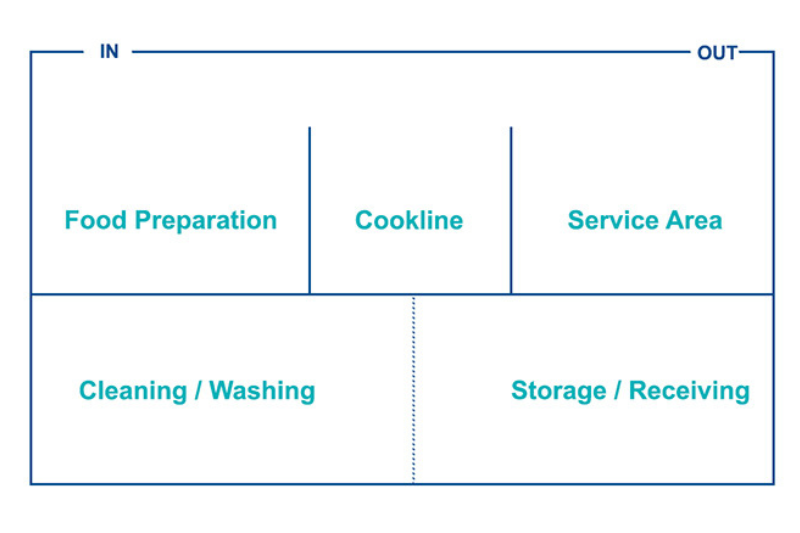
The circle of flow is exactly what it sounds like — a logical, sequential path that product follows through a kitchen, from the moment it arrives to the moment it leaves:
Receiving
Storage
Prep
Cooking
Serving
Dish
Trash
Each stage should lead naturally into the next, with as little backtracking or crossing of paths as possible. Product comes in the back door, moves into storage, gets pulled for prep, goes to the line, heads out to the guest, and the cycle closes out with dish and trash — ideally without doubling back through spaces that are already busy doing something else.
It sounds simple on paper. But a surprising number of kitchen layouts fight against this flow rather than support it — because the space was designed around square footage or equipment specs, rather than around how product and people actually need to move through it.
Why This Matters More Than It Seems
When a kitchen is designed around circle of flow, the benefits show up in ways that are easy to underestimate before opening day:
- Fewer bottlenecks during peak service, because staff aren't crossing paths or waiting on each other to clear a station
- Less wasted motion, which adds up over the course of a long shift
- Cleaner separation between raw and finished product, which supports both efficiency and food safety
- A kitchen that's easier to train new staff into, because the logic of the space matches the logic of the workflow
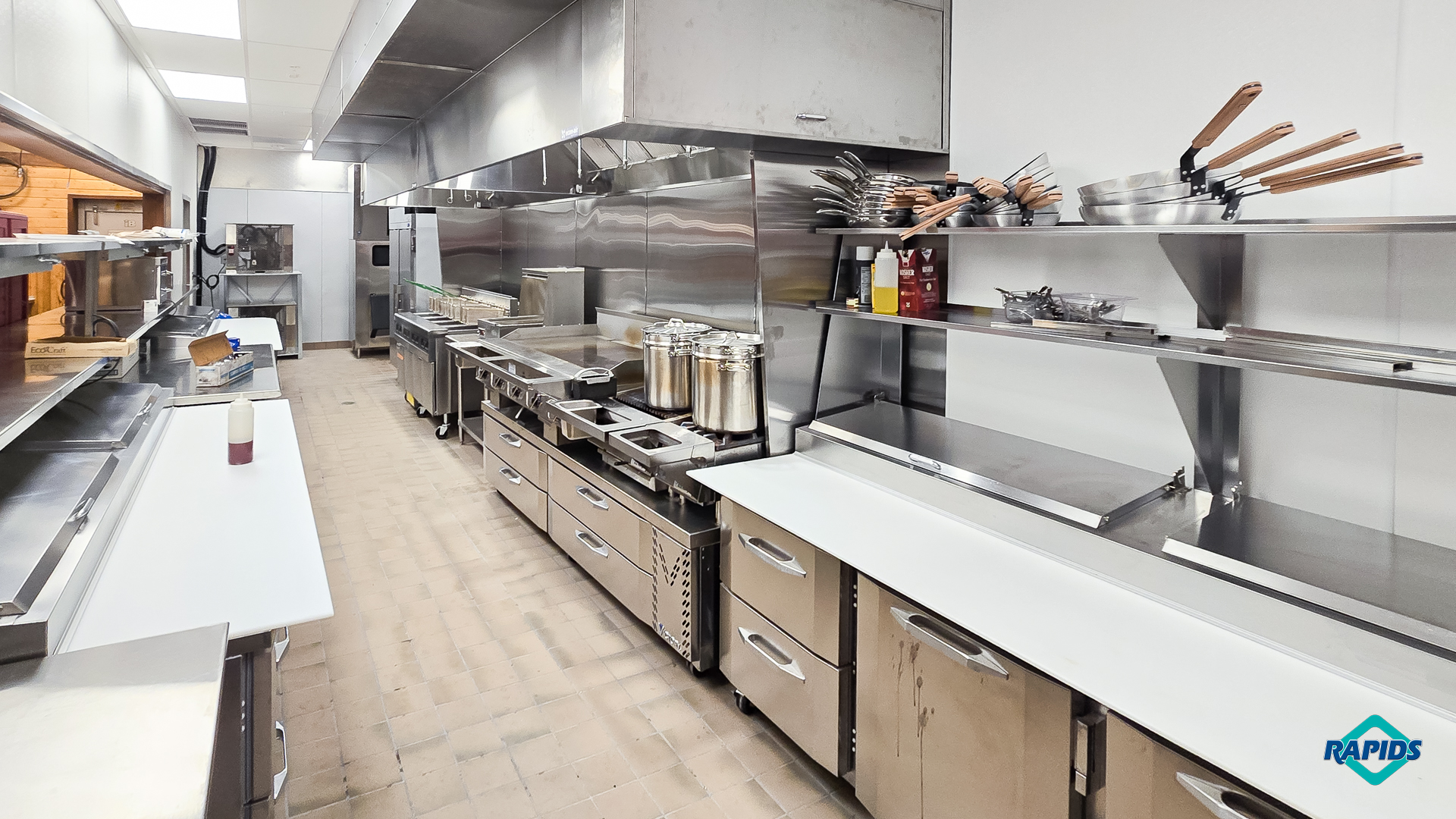
It's a framework, not a rigid formula — every kitchen's version of the circle looks a little different depending on the menu, the service style, and the footprint available. But the underlying principle holds across almost every concept: design the space around how product needs to move, not the other way around.
No Plan Survives Contact With Opening Day
Even with a well-designed flow on paper, Jason was candid on the podcast about something every operator eventually learns: no matter how well a project is planned, something is going to go wrong along the way. A vendor lead time shifts. A permit takes longer than expected. A piece of equipment doesn't fit quite the way the drawings said it would.
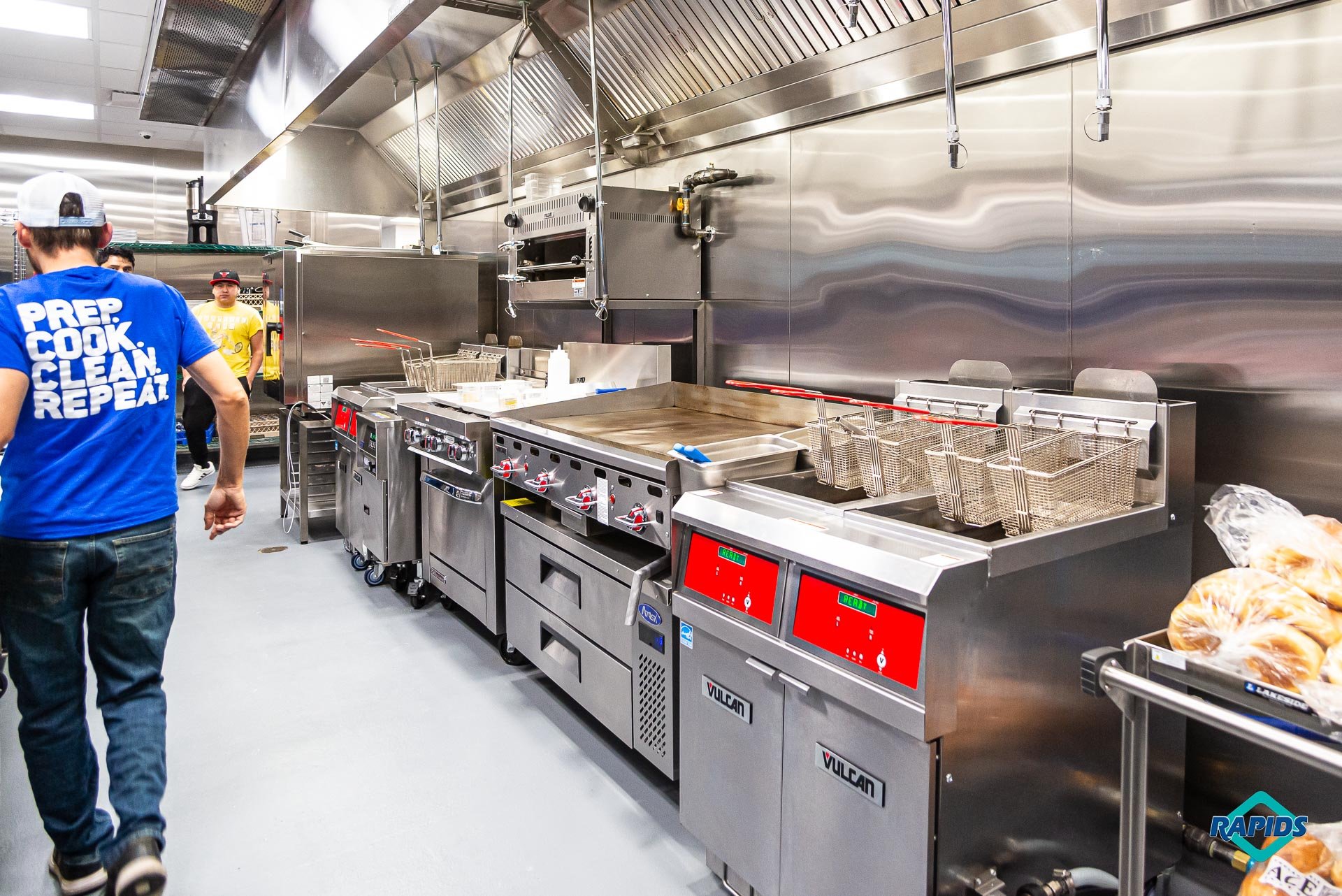
That's part of why we see our role at Rapids as more than just handing over a set of plans. We're your point of contact through those moments — not just at the start of the project, but when the unexpected comes up along the way.
That also means we're not running through a generic checklist when we sit down with a client. We're listening to what you actually need — your menu, your service style, your team, your space — and building the circle of flow around that, rather than fitting your operation into a template.
A Framework, Not a Formula
The circle of flow is a good example of something that sounds obvious once you hear it, but rarely gets the attention it deserves early in the design process. It's one of the first things we think through with clients, right alongside questions about menu and service model, because it shapes almost every other decision that follows — where equipment goes, how much storage is needed, how staff move during a rush.
If you're in the early stages of planning a kitchen, bar, or foodservice space, thinking through your own circle of flow — even roughly — is a useful place to start. And if you want help mapping it out for your specific concept, that's exactly the kind of conversation we're glad to have.
For more information and to engage with our team, please contact us via our contact form or at (866) 503-2655. We look forward to working with you to provide the best solutions for your needs.
LET'S FIND YOUR SOLUTION
Rapids Contract & Design serves the United States with locations in Iowa, Minnesota, and Missouri. Our experts are ready to assist with your foodservice needs—contact us for support, Monday through Friday, 8 AM to 5 PM CST.
or call (800) 899-6604