
When designing a commercial kitchen, efficiency, speed, and safety are essential. The layout of your kitchen plays a pivotal role in optimizing traffic flow, ensuring that both the kitchen staff and cooking equipment are used to their fullest potential. With the right top commercial kitchen layouts, you can achieve a streamlined workflow, reduce congestion, and enhance productivity. Here are some commercial kitchen layouts to consider when planning your kitchen’s square footage.

1. Zoned Layout
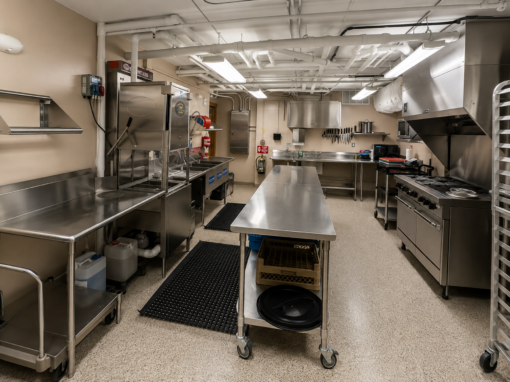
A zoned kitchen design is perfect for large commercial kitchens. This layout divides the kitchen into distinct zones for different tasks such as cooking, preparation, dishwashing, and storage. It’s particularly useful for keeping the kitchen organized and preventing congestion.
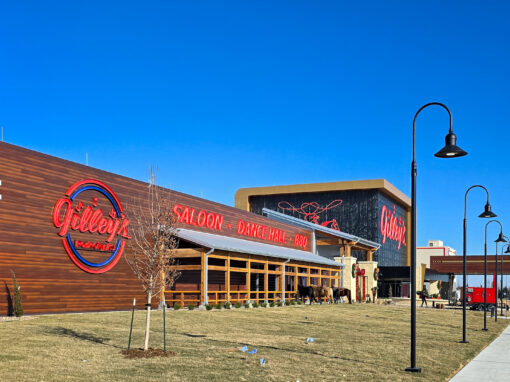
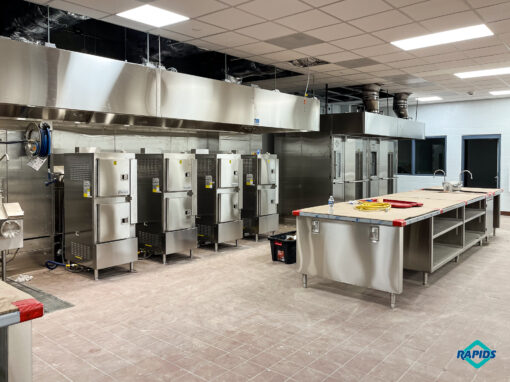
This layout also allows for the installation of open shelves for storage, making it easier for staff to quickly access cooking supplies. With clear separation of tasks, a zoned layout ensures smooth traffic flow and efficient operation. An example of this layout can be seen in our TRIO Entertainment Complex project.

2. Assembly Line or Linear Layout
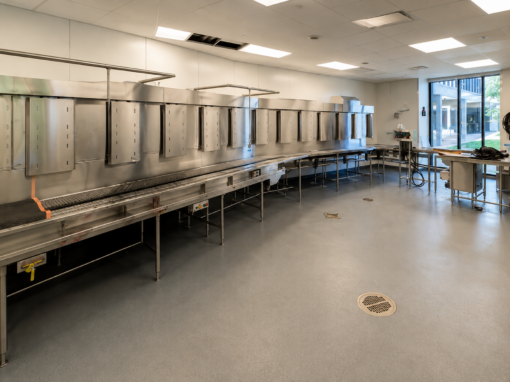
The assembly line kitchen layout is best suited for kitchens with a limited menu that require quick preparation times, such as fast food restaurants. This layout creates a clear, linear progression from order taking to food assembly, which ensures easy access to all cooking equipment and prep stations. It’s an excellent choice for operations that emphasize speed, allowing kitchen staff to work efficiently without unnecessary delays.

3. Parallel Layout
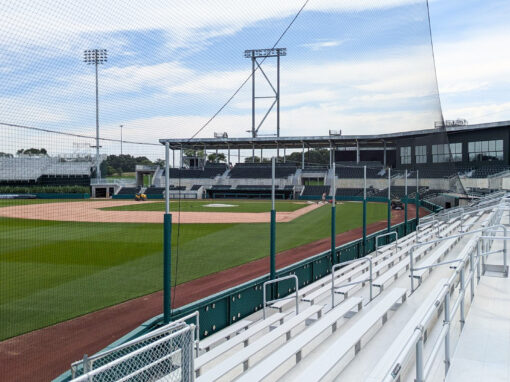
A parallel kitchen layout places equipment and stations along two parallel lines. This configuration works well in kitchens that follow a linear workflow and where tasks progress from one end to another. This layout offers efficient use of space saving and easy access to both cooking and prep areas. It’s particularly useful for smaller kitchens, where optimizing the available square footage is crucial. An example of this layout can be seen in our Feather Stone at Hickory Hill project.

4. U-Shaped Layout
A U-shaped kitchen layout positions cooking equipment and workstations along the three sides of a U, leaving the center open for movement. This layout is perfect for larger kitchens, as it offers ample working area and helps to avoid cross-traffic. The layout ensures that kitchen staff can quickly access all necessary tools and ingredients, minimizing unnecessary movement. This design works particularly well for restaurants with a diverse menu and multiple prep tasks.

5. L-Shaped Layout
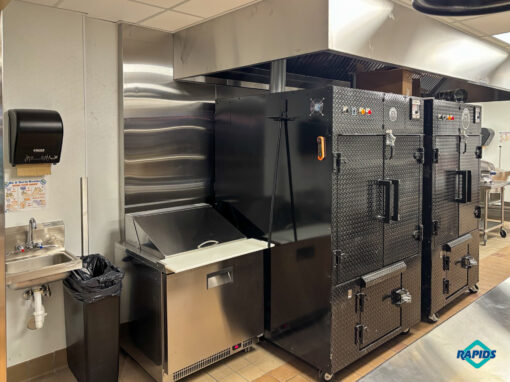
For kitchens with limited space, the L-shaped kitchen layout is a space-saving option that places cooking equipment and workstations along two adjacent walls. This configuration is perfect for smaller kitchens or areas where maximizing working area is key. The layout provides efficient work zones, improving workflow between cooking, preparation, and cleaning areas. An example of this layout was implemented in our Oak Park Event Center project in Dayton, IA.
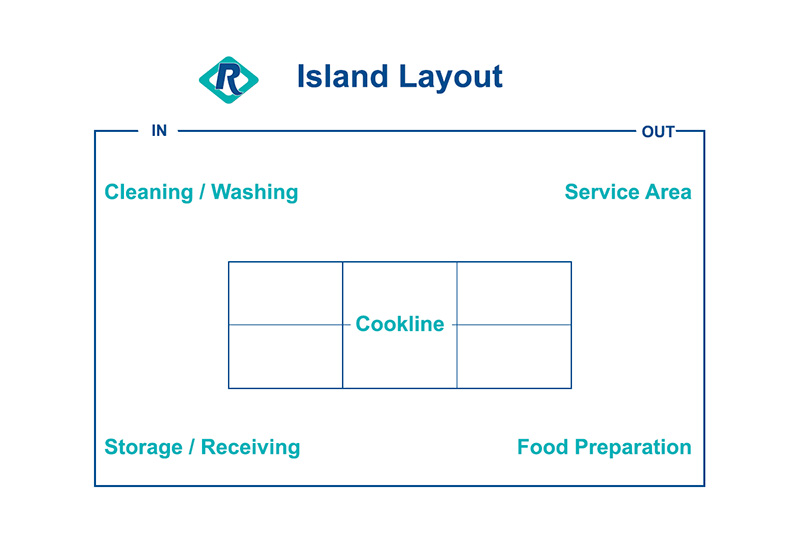
6. Island Layout
In larger kitchens, an island layout offers flexibility and more working area by positioning stations and cooking equipment in the center of the kitchen. This design allows kitchen staff to work from all sides of the kitchen island, which improves the accessibility of ingredients and tools.
An island layout is ideal for a spacious kitchen where the traffic flow needs to be organized and streamlined. It’s also a great option for creating a breakfast bar or additional dining space for guests.

7. Zone and Flow Layout
The zone and flow layout combines zoned kitchen designs with an organized flow of tasks. This layout ensures that each task flows into the next without unnecessary backtracking. For instance, work zones can be created for preparation, cooking, and plating, all connected seamlessly to avoid cross-traffic. This layout is an excellent option for larger kitchens, where operational efficiency and the careful use of space saving designs are essential. An example of this layout can be seen in our CityWalk Eatery project.
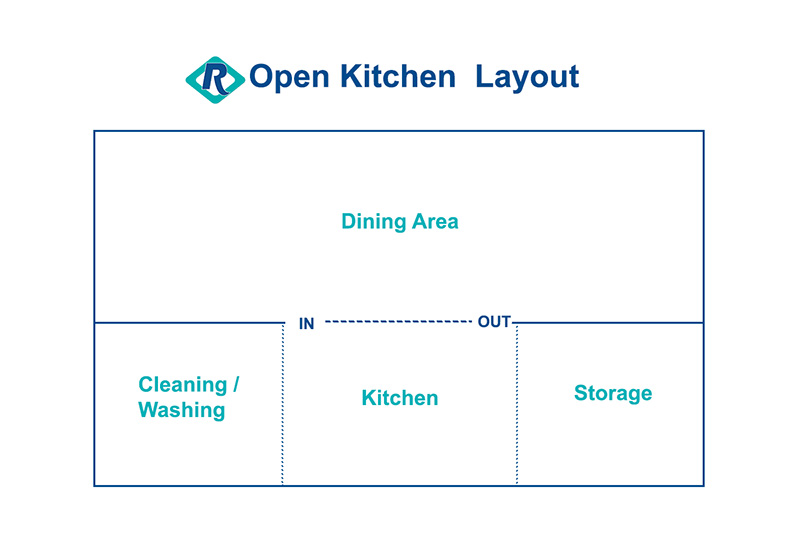
8. Open Kitchen Layout
The open kitchen layout provides transparency by allowing customers to see the cooking process. This design can add a modern, interactive element to the restaurant's interior design. Although it requires careful planning to maintain cleanliness and order, it helps establish a direct connection with diners.
An open kitchen layout can also be paired with open shelves for additional storage, giving the kitchen a more organized and approachable feel. However, this layout requires a careful focus on energy efficiency and cleanliness to ensure a positive impression. An example of this layout can be seen in our Mellow Mushroom project.

9. Hybrid Layout
A hybrid kitchen design is a combination of different layout styles, tailored to the specific needs of your kitchen. For example, you might use a U-shaped layout for cooking and an assembly line layout for order preparation. This layout idea is ideal for optimizing both workflow and traffic flow, allowing you to take advantage of various design features and accommodate both high volume and specialized tasks. An example of this layout was implemented in our Cedar Rapids Independent Living project.
Incorporating the Right Elements into Your Commercial Kitchen Layout
When planning your commercial kitchen, it’s important to consider various design elements that contribute to both functionality and aesthetics. For instance, including kitchen islands in your layout can enhance both workflow and storage. The placement of cabinets and appliances should be carefully planned to ensure easy access and efficiency. If space allows, consider integrating a breakfast bar or additional dining space for a more customer-friendly layout.
The kitchen work triangle—the arrangement between the sink, stove, and refrigerator—can greatly improve efficiency. By strategically placing these key stations, you minimize unnecessary movement and streamline food preparation. Additionally, ensuring energy efficiency by choosing the right appliances and equipment can have long-term benefits for your restaurant’s operations, lowering energy costs while supporting a sustainable kitchen environment.
Selecting the right commercial kitchen layout depends on your restaurant’s needs, from the square footage of your kitchen to the traffic flow and the type of service you offer. Whether you choose an L-shaped layout, U-shaped layout, or a zoned kitchen design, it’s important to design a space that supports efficient operations, meets your staff’s needs, and enhances the overall customer experience.
At Rapids, our expert kitchen designers can help you select the best layout floor plans for commercial kitchens. With years of experience creating custom kitchen designs, we’re here to help you optimize your kitchen’s layout for maximum productivity and safety.
Don’t know which design you need? Contact us, and we’ll help you figure it out. Let us assist you in selecting the perfect commercial kitchen layout for your business.
LET'S FIND YOUR SOLUTION
Rapids Contract & Design serves the United States with locations in Iowa, Minnesota, and Missouri. Our experts are ready to assist with your foodservice needs—contact us for support, Monday through Friday, 8 AM to 5 PM CST.
or call (800) 899-6604