Designing an institutional kitchen often begins with a standard checklist: convection ovens, steamers, tilt skillets, kettles, fryers, ranges, and holding cabinets. For decades, this traditional cook line model has been the default approach for schools, healthcare facilities, and high-volume foodservice operations.
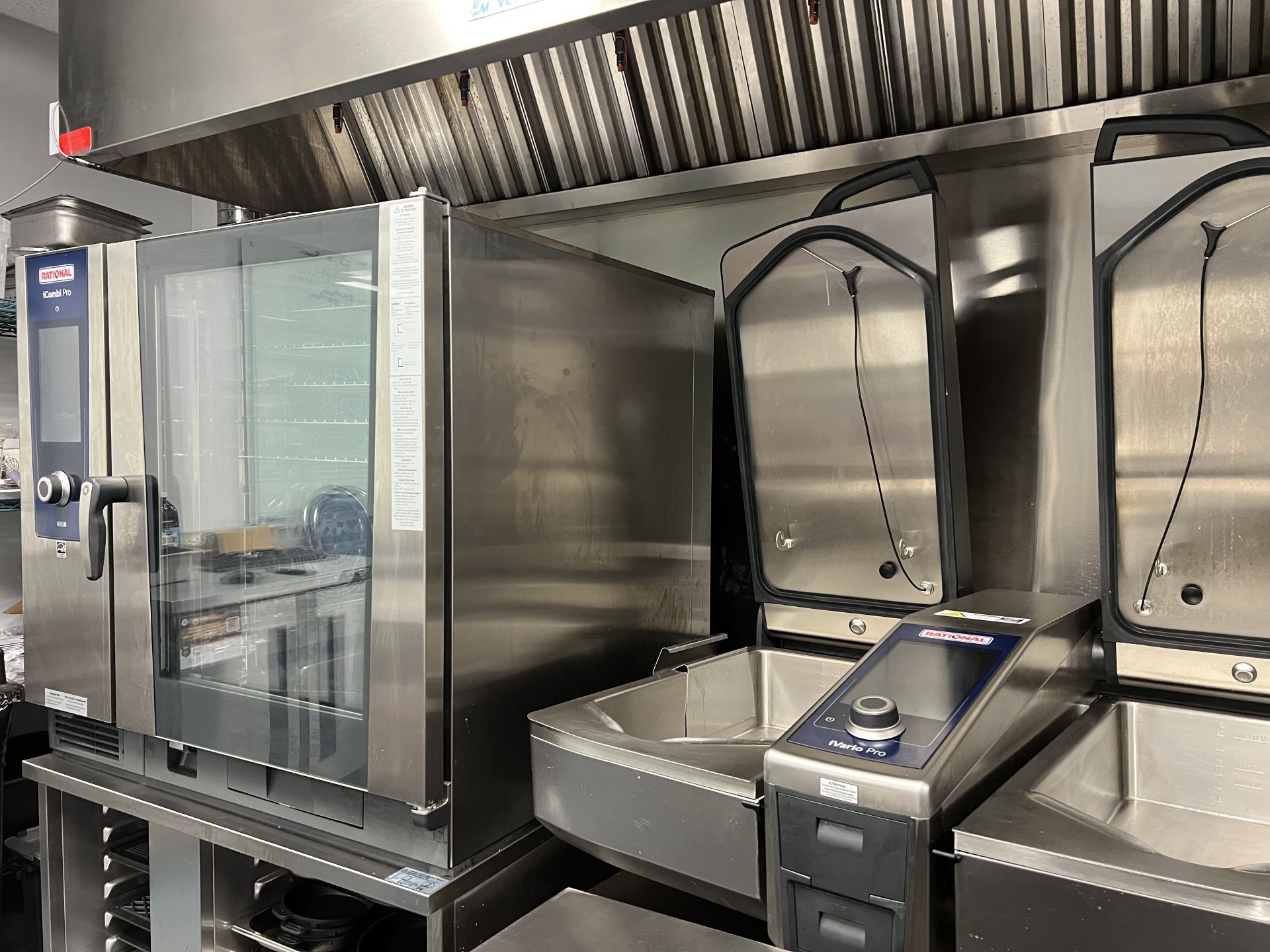
But today’s institutional kitchens are facing a very different set of challenges. Labor shortages, rising energy costs, limited square footage, and increased expectations for food quality are pushing operators to rethink how kitchens are designed and equipped. Instead of building around multiple single-purpose appliances, many operations are now consolidating production around two intelligent systems:
- Rational iCombi Pro
- Rational iVario Pro
Together, these two systems can support nearly every core cooking application required in high-volume institutional foodservice.
The Complexity of a Traditional Cook Line
A conventional cook line is built piece by piece. Each appliance performs a primary function, and staff move between stations to complete different components of a meal. While functional, this setup often creates operational challenges.
A traditional institutional line often includes:
- Convection ovens for roasting and baking
- Steamers for vegetables and batch cooking
- Tilt skillets or kettles for soups and braising
- Fryers for fried menu items
- Ranges for sautéing and finishing
- Holding cabinets for hot food storage
Every additional appliance requires:
- Dedicated floor space
- Utility connections
- Ventilation planning
- Preventative maintenance
- Staff training
Over time, this adds up. More appliances mean more infrastructure to manage — bigger hoods, more electrical load, more plumbing coordination, and higher project costs, whether you're renovating or building new.

Covering Nearly 99% of Daily Production Needs
When combined, the iCombi Pro and iVario Pro can handle nearly all cooking applications required in institutional foodservice. Together, they provide a flexible, centralized solution capable of managing everything from roasting and steaming to baking, boiling, and large-batch production. Only highly specialized or niche applications may require additional standalone equipment. For most schools, healthcare systems, and corporate dining operations, these two systems form a complete production foundation, centralizing control, improving precision, and simplifying workflow.
Replacing Ovens and Steamers with Intelligent Climate Control
The iCombi Pro addresses the baking, roasting, steaming, and regenerating side of production through intelligent climate management. By combining steam and convection heat into one system, it eliminates the need for separate stand-alone ovens and steamers in many institutional kitchens.
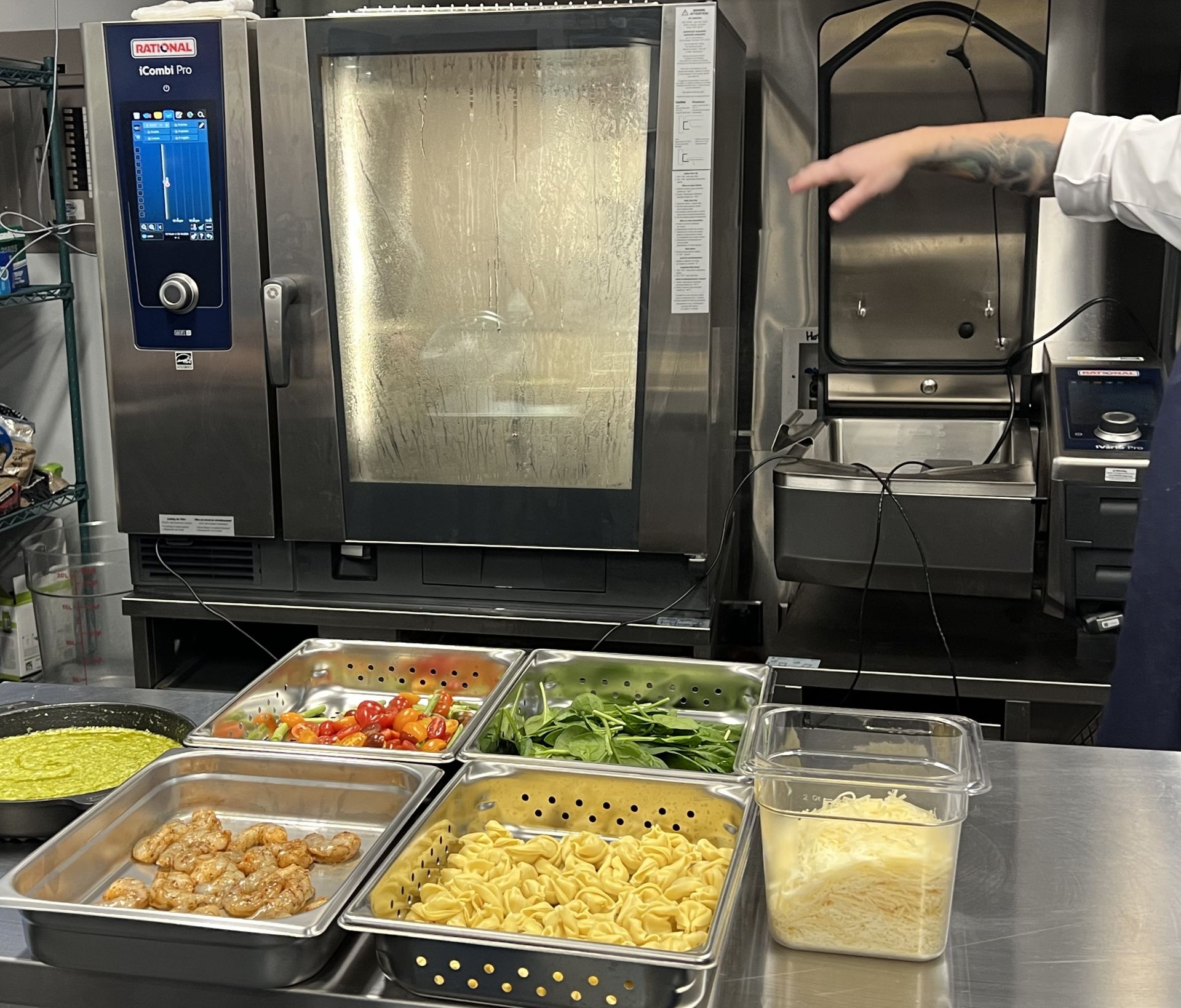
In practical use, the iCombi Pro can replace convection ovens, stand-alone steamers, much of the regeneration equipment, and many holding applications. Its key advantage is the ability to automatically regulate temperature, humidity, and airflow based on the product and load. If the door is opened for an extended period or a colder batch is added, the system adjusts immediately, reducing the need for staff to make manual changes and ensuring consistent results across every shift.
The iCombi Pro also supports advanced operational needs, including:
- Mixed loads without flavor transfer
- Individual timers and production scheduling
- Overnight cooking
- HACCP data capture
- Automatic cleaning and descaling
For institutions with rotating staff or less experienced team members, this level of automation provides stability, predictability, and reliability that traditional equipment cannot easily match.
Replacing Open-Top Cooking Equipment with One Multifunctional System
The iVario Pro consolidates what would traditionally require several open-top appliances. Instead of maintaining separate tilt skillets, kettles, fryers, and ranges, operations can centralize those functions into a single multifunctional platform.
Depending on the model and configuration, the iVario Pro can replace large tilt skillets used for batch cooking and sautéing, multi-purpose kettles for boiling, simmering, and sauce preparation, full-size ranges for traditional stovetop cooking, commercial deep fryers for frying a variety of products, and pressure cookers for fast, high-temperature cooking.
It supports a wide range of cooking applications, including:
- Boiling liquids and cooking pasta or vegetables
- Braising meats and vegetables for tender results
- Pan frying proteins and vegetables with precise heat control
- Deep frying items evenly and efficiently
- Low-temperature cooking for delicate foods
- Sous vide preparation for consistent texture and flavor
- Pressure cooking with an optional add-on for faster results
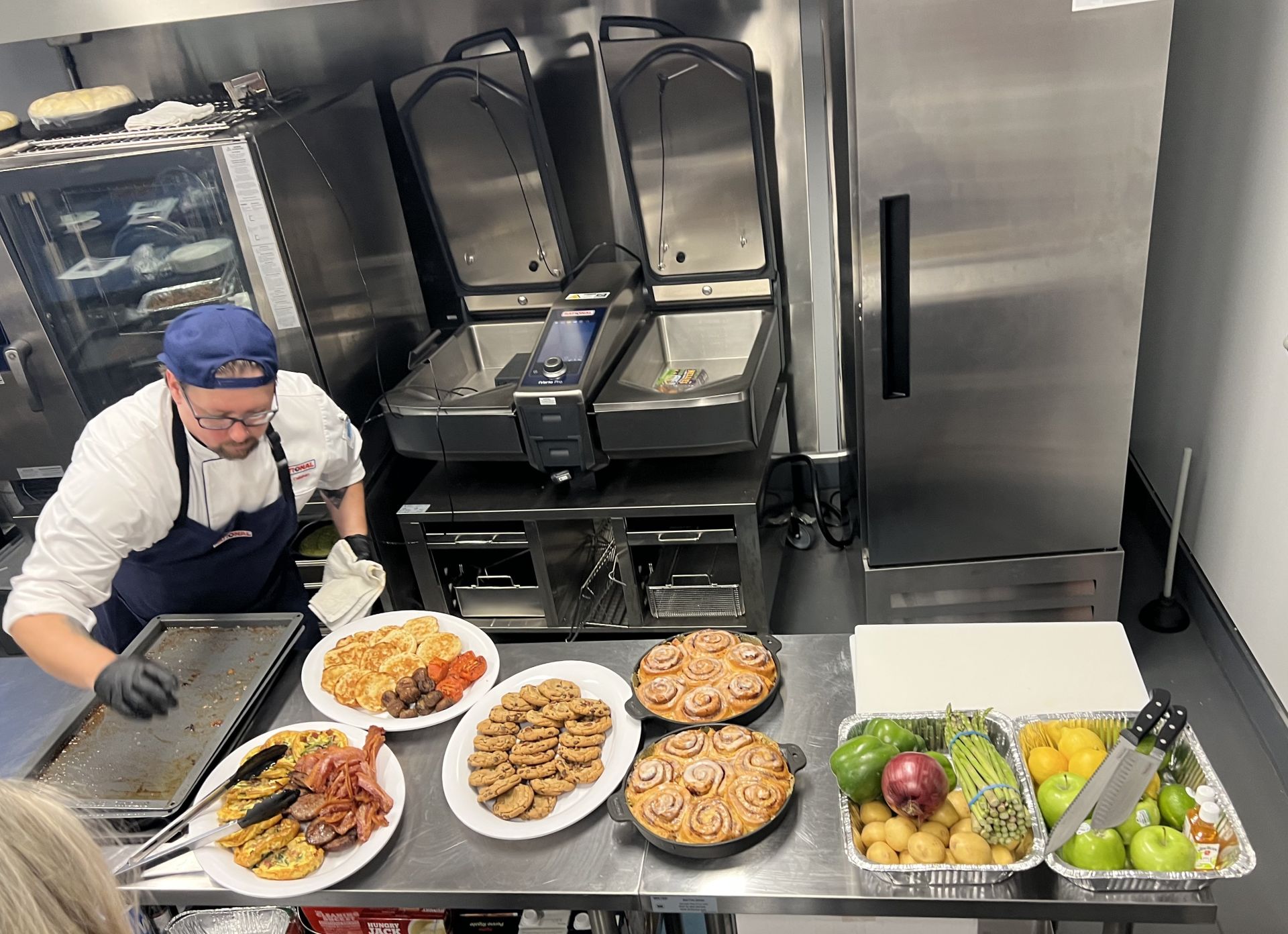
Its advanced heating surface is divided into controlled zones, allowing different temperature areas within the same pan. This makes it possible to prepare multiple components at once - a valuable capability for school breakfast programs, healthcare tray lines, and catering production.
Because the system detects load size and product condition automatically, it adjusts heat delivery in real time. That reduces the risk of burning, improves energy efficiency, and shortens cooking times compared to conventional equipment.
A Smarter Approach to Institutional Kitchen Design
Replacing a traditional cook line with two multifunctional systems changes more than daily cooking. It changes how kitchens are designed, operated, and planned for the future. Fewer appliances means a smaller footprint — freeing up space for better workflow, more storage, or additional service areas. This creates a more efficient environment for staff while simplifying infrastructure planning, including utilities and ventilation, and can make construction or renovation projects faster and more predictable.
Fewer standalone appliances means simpler workflows, easier training, and easier cleaning. Maintenance needs drop too — less downtime, more reliable operation. By centralizing production into integrated systems, staff can focus on cooking and service rather than constantly managing multiple machines, maintaining consistent quality across all service periods.
This approach is not just an equipment upgrade - it represents a strategic shift in institutional kitchen design. Two intelligent systems simplify operations without sacrificing performance. Kitchens can adapt easily to menu changes and varying loads — building a future-proof space that balances efficiency, quality, and long-term planning.
For more information and to engage with our team, please contact us via our contact form or at (866) 503-2655. We look forward to working with you to provide the best solutions for your needs.
LET'S FIND YOUR SOLUTION
Rapids Contract & Design serves the United States with locations in Iowa, Minnesota, and Missouri. Our experts are ready to assist with your foodservice needs—contact us for support, Monday through Friday, 8 AM to 5 PM CST.
or call (800) 899-6604