
Walk into any restaurant, casino, hotel, or arena and order a meal, and you're seeing the finished product of an industry most people never think about. Behind that line — the one turning out plates in minutes flat, night after night — sits a process most guests, and honestly most business owners, never see: the design, the equipment, the coordination, and the people who make it all work under pressure.
This is an inside look at what actually goes into building a commercial kitchen — and why the work that matters most rarely shows up on paper.
It Starts Long Before the First Piece of Equipment Arrives
A commercial kitchen build doesn't begin with steel and stainless — it begins with a concept. What's the menu? What's the volume? Is this a 200-seat restaurant or a casino floor serving thousands a night? Every one of those answers changes the design.
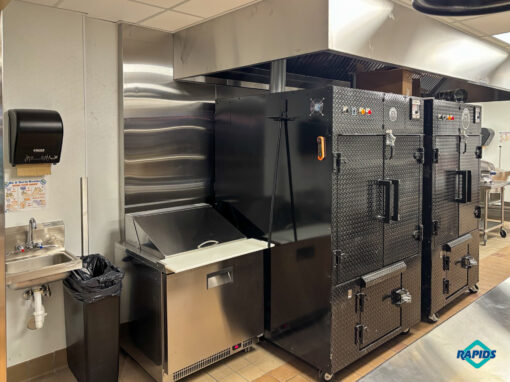
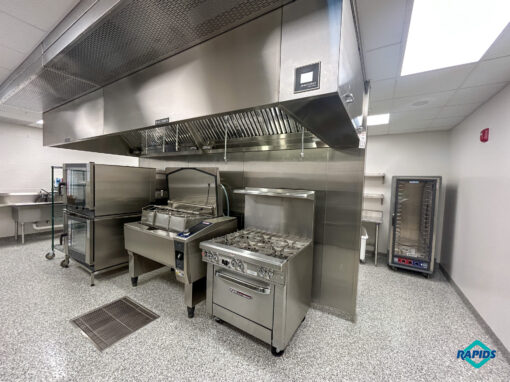
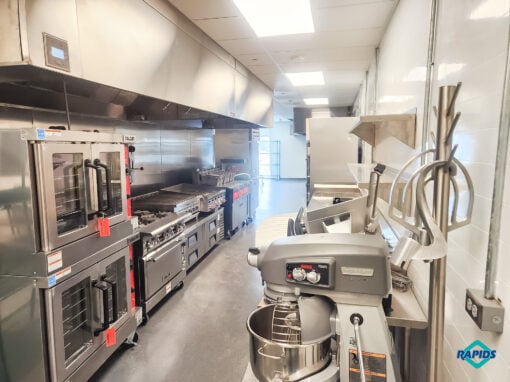
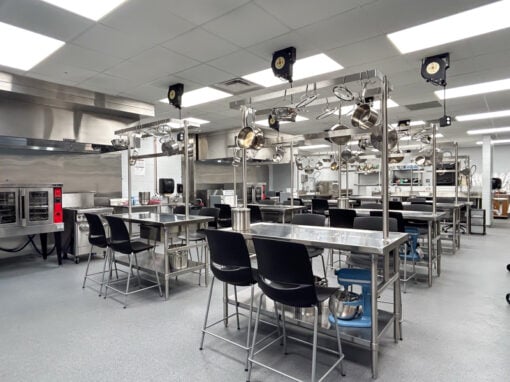
From there, the work moves into specification: choosing the right combi ovens, refrigeration, ventilation, and fabrication to match not just the menu, but the space, the budget, and the codes that govern commercial food service. Health codes. Fire codes. ADA requirements. None of it is glamorous, and all of it has to be right, because a mistake here doesn't show up until the kitchen is already built.
Then Come the Trades — and the Coordination That Holds It Together
A commercial kitchen isn't installed in a vacuum. It's one piece of a much bigger construction project, which means constant coordination with general contractors, electricians, plumbers, HVAC teams, and building owners — all working against the same deadline, often in the same tight footprint.
This is where a lot of projects either come together or fall apart. Equipment has to be protected during construction. Utility rough-ins have to line up exactly with equipment specs. Inspections have to pass the first time, not the third. It takes a project management team that's done this enough times to know where the problems usually hide — and to catch them before they become expensive.
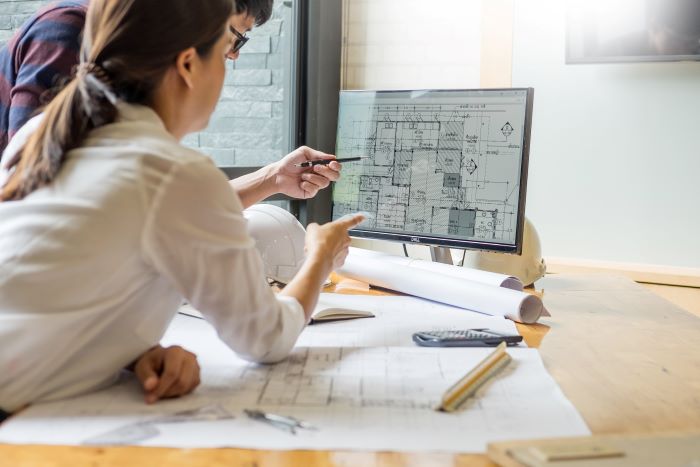
The Install Is Where Everything Gets Tested
Getting equipment onto a job site is one thing. Getting it installed, connected, calibrated, and ready to pass a health inspection is another. This phase is detail work: making sure every piece is level, every connection is sealed, every guard and shield is in place. It's also relationship work — the kind that happens between a project manager and the trades they've worked beside for years, where a phone call solves a problem that would otherwise cost a week.
Why We Still Show Up on the Job Site
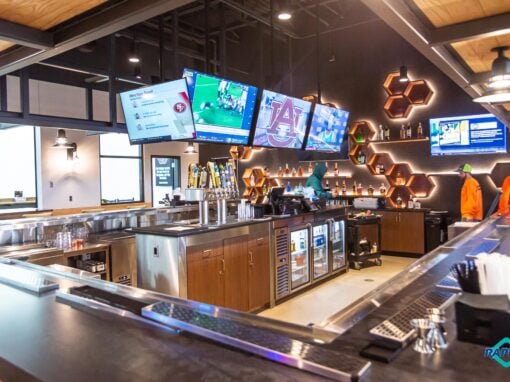
Our president, Eric Schmitt, recently spent a day on-site at the Cedar Crossing Casino project in Cedar Rapids, and what he came away with says a lot about why this industry works the way it does. In his words:
"Too much of leadership happens from thirty thousand feet. From that height, everything is a number. But what actually sets our companies apart never shows up in a spreadsheet. It shows up on the job site."
He pointed to Bob Wiltgen, the project manager on that job, and the kind of care that doesn't show up on an invoice: equipment protected and covered, real relationships with every trade on-site, the quiet detail work that most people never see.
He also pointed to partnership. The general contractors and trades on a project like Cedar Crossing aren't strangers — they're the same crews delivering, job after job, across the region. And he was honest about the tension every growing company faces: distance gives leadership the view of the whole board, but too much distance creates a gap between the people making decisions and the people doing the work.
His challenge to other leaders: get out, ride along, and remember that the field is where the real work — and the real relationships — live.
Why This Matters for Anyone Building a Kitchen
If you're an owner or operator planning a commercial kitchen, this is the part worth understanding: the difference between a smooth build and a painful one usually isn't the equipment brand on the spec sheet. It's the people managing the details in between — the ones protecting your investment on-site, coordinating with a dozen trades, and catching problems before they become delays.
That's what building a commercial kitchen actually takes. Not just design and equipment, but a team that shows up, stays close to the work, and treats every job like their name is on it.
For more information and to engage with our team, please contact us via our contact form or at (866) 503-2655. We look forward to working with you to provide the best solutions for your needs.


LET'S FIND YOUR SOLUTION
Rapids Contract & Design serves the United States with locations in Iowa, Minnesota, and Missouri. Our experts are ready to assist with your foodservice needs—contact us for support, Monday through Friday, 8 AM to 5 PM CST.
or call (800) 899-6604