
In commercial kitchens, efficiency, sanitation, and compliance are more than just operational goals - they are essential to running a successful foodservice operation. Disposers and collector systems help manage food waste, reduce labor, and improve workflow, especially in high-volume kitchens such as hotels, banquet facilities, hospitals, or school cafeterias. Choosing the right system requires understanding your kitchen’s daily volume, the type of equipment in use, and local regulations that may affect installation. By selecting the appropriate disposer or collector system, you can save water, improve efficiency, and reduce the environmental impact of your kitchen.
Key Questions Before Specifying a System
Before selecting a disposer or collector, it’s important to evaluate your kitchen’s specific needs. This ensures you choose a system that keeps up with your operation without unnecessary cost or complexity:
- Meals per day / scrapping cycles per hour: Understanding the volume of meals prepared daily helps determine the throughput needed from the system. High-volume kitchens may require larger, bowl-mounted disposers or conveyor-style scrapping systems.
- Station usage: Some stations are used continuously, while others may only need intermittent scrapping. Continuous-use areas may need more robust motors or specialized controls to prevent overheating and maximize lifespan.
- Cookware and plate sizes: Stock pots, steam table pans, and trays all have different sizes and shapes. Ensuring your disposer can handle your largest or most frequently used cookware is critical to avoid bottlenecks.
- Water-saving requirements: Advanced disposer models feature operator sensors and timed water flow to minimize water use. Knowing whether water conservation is a priority can influence your system choice.
- Location in the kitchen: Prep areas, dishwashing stations, or general-use locations may require different models and installation configurations. A bowl-mounted disposer may be ideal for a dedicated dishroom scrapping station, while a sink-mounted model works well in prep areas.
- Composting or local recycling: If your operation participates in composting or recycling programs, selecting a system compatible with waste diversion requirements is key.
- Local code restrictions: Many municipalities limit disposer use or have specific installation requirements. It’s crucial to check local regulations before finalizing a specification to ensure compliance.
By addressing these questions upfront, kitchen designers and operators can specify a system that meets both performance and compliance needs.
Choosing the Right Disposer
Sink-Mounted Disposers
Sink-mounted disposers are versatile, cost-effective, and suitable for stations with low to moderate throughput. These units typically handle up to 200 meals per day and work well in prep areas or secondary scrapping stations. Sink-mounted disposers are easy to integrate into existing sinks using 3½” or 6½” adapters. Water is plumbed directly into the disposer throat, often combined with a faucet or pre-rinse spray, which ensures efficient scrapping without disrupting workflow. For retrofits or smaller operations, these units provide an affordable solution with minimal installation complexity.
Bowl-Mounted Disposers
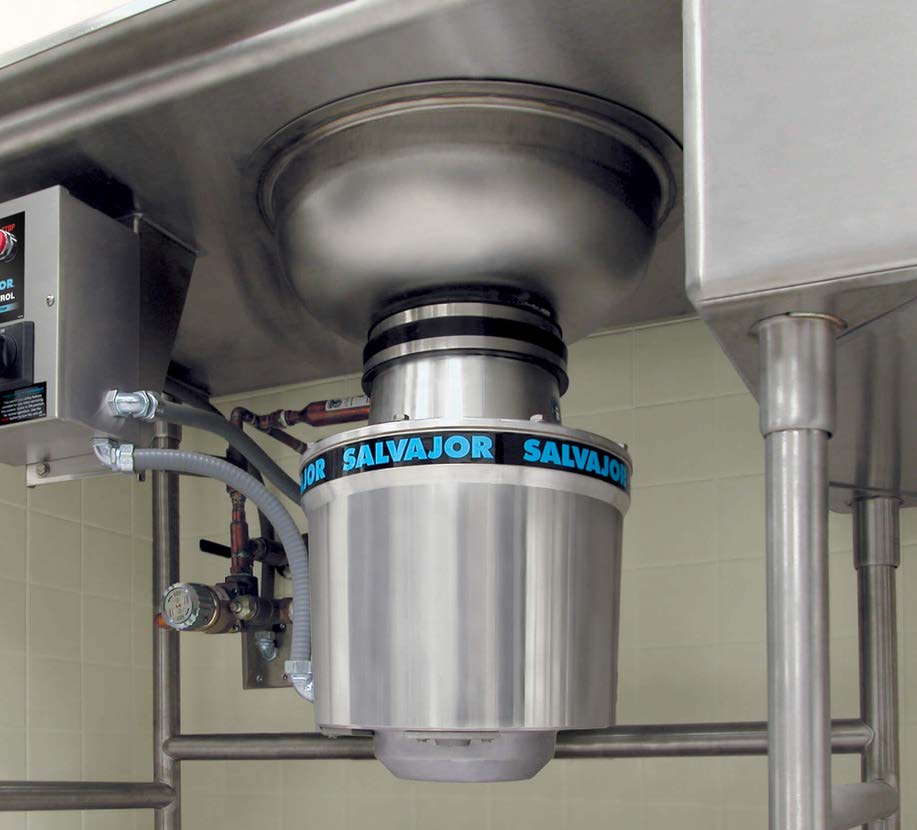
Bowl-mounted disposers are designed for high-volume, dedicated scrapping stations. These units feature larger throats (12”, 15”, 18”) and are ideal for dishrooms, banquet staging, or pot/pan scrapping areas. The larger bowl allows for faster throughput, and integral nozzles flush food waste directly into the disposer. Bowl-mounted systems often include controls to optimize water flow and ensure efficient scrapping, freeing operators to focus on other tasks. By improving speed and reducing manual labor, bowl-mounted disposers enhance kitchen productivity and reduce bottlenecks in busy operations.
Collector Systems
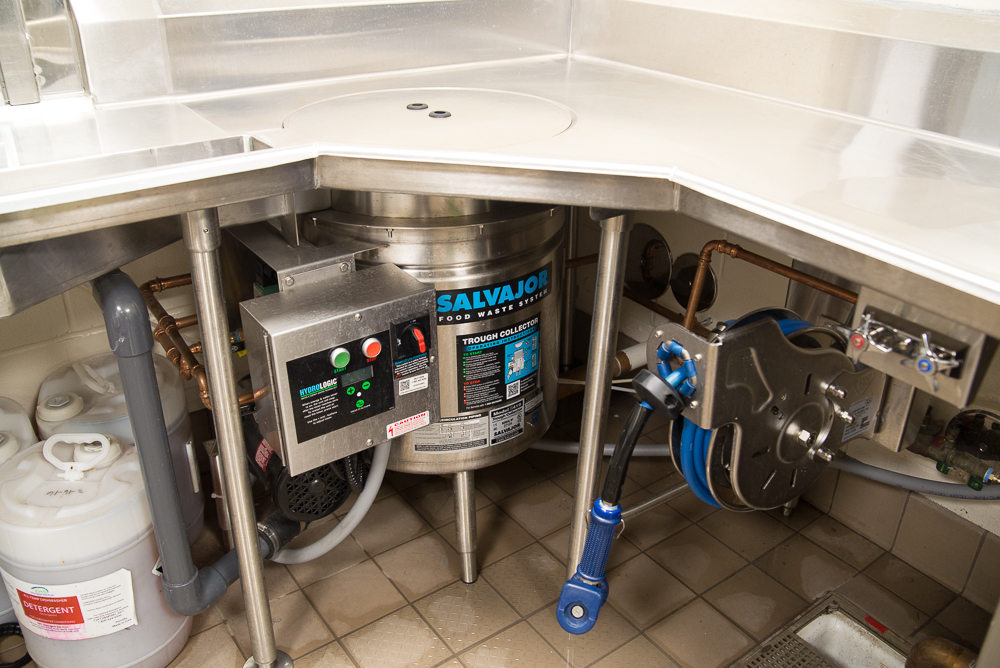
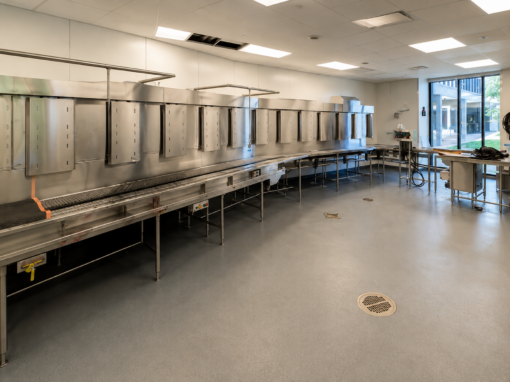
Collector systems provide an alternative to traditional disposers, particularly in areas where municipal codes restrict disposer use. Collectors capture scraps in a basket, allowing fibrous or non-soluble waste to be removed for composting or disposal, while soluble food waste is safely washed through the sewer. These systems are often simpler to install and maintain compared to full disposer or pulper systems, and they provide similar efficiency gains. Collector systems are particularly useful in kitchens focused on sustainability, compliance, or facilities with multiple scrapping stations requiring high throughput.
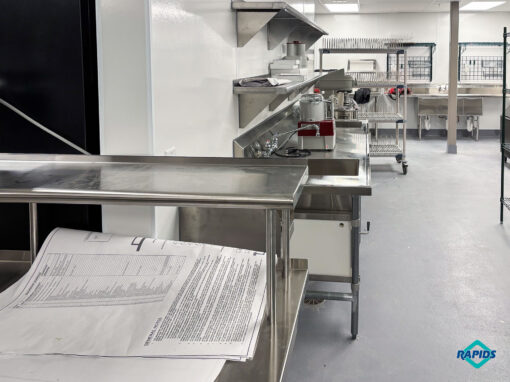
Curious to see a real-world example? Take a look at how we implemented a collector system at Linn Mar High School project, where our team designed and installed a solution that improves efficiency, reduces waste, and meets all local regulations.
Code Considerations
Regulations governing disposer use vary widely. Some municipalities prohibit certain models, limit solids entering sewers, or require pre-treatment of food waste. Before specifying a system, always:
- Verify local codes with the municipal plumbing authority or interactive manufacturer maps.
- Confirm grease interceptor sizing and any limitations on upstream disposer use.
- Ensure plumbing connections are adequate for flow requirements to prevent clogs or motor overloads.
Addressing these considerations upfront ensures that your kitchen is compliant, reduces the risk of costly retrofits, and maintains smooth operations.
Selecting the right disposer or collector system ensures a commercial kitchen runs efficiently, reduces labor and water usage, and meets local codes. By understanding throughput requirements, station usage, and control options, kitchen designers and operators can make informed decisions that improve productivity and sustainability. If you have questions or need a system tailored to your facility, contact our team - including our Solutions Engineer - who will guide you and help maximize the benefits of modern scrapping technology.
Prefer a Presentation Version?
Download a PDF version of this article to save or share with your team.
For more information and to engage with our team, please contact us via our contact form or at (866) 503-2655. We look forward to working with you to provide the best solutions for your needs.
LET'S FIND YOUR SOLUTION
Rapids Contract & Design serves the United States with locations in Iowa, Minnesota, and Missouri. Our experts are ready to assist with your foodservice needs—contact us for support, Monday through Friday, 8 AM to 5 PM CST.
or call (800) 899-6604